Swimbaits-Quick Answer
Swimbaits are one of the most consistent artificial lures for catching striped bass, hybrid striped bass, and white bass on Lake Tawakoni. They imitate the lake’s abundant threadfin and gizzard shad, allowing anglers to cover water efficiently while matching the natural forage. When paired with good electronics and an understanding of seasonal fish movement, swimbaits can produce quality catches throughout much of the year.
Why Swimbaits Continue to Produce on Lake Tawakoni
Lake Tawakoni is known for healthy populations of striped bass, hybrid striped bass, and white bass that spend much of the year feeding on shad. Since baitfish make up the majority of their diet, swimbaits offer one of the most realistic artificial presentations available.
Unlike live bait, swimbaits allow anglers to quickly search large areas, locate active schools, and adjust presentations based on fish behavior. They excel when fish are suspended over open water, feeding on points, holding near creek channels, or chasing bait across shallow flats.
Many experienced Lake Tawakoni guides keep swimbaits rigged throughout the day because they remain productive during changing conditions and often trigger aggressive strikes.
Matching the Lake’s Forage
Success with swimbaits begins by matching the size and color of the baitfish predators are actively feeding on.
Threadfin shad usually measure between two and four inches and become the primary forage during much of the year. Gizzard shad grow considerably larger, especially during late summer and fall, making larger swimbaits effective for targeting bigger striped bass.
Natural colors generally perform best in clear water, including:
- Pearl
- White
- Smoke
- Silver
- Shad patterns
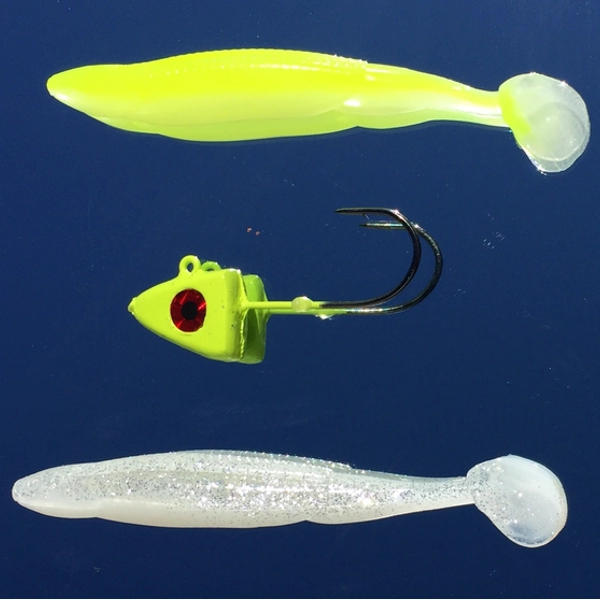
When recent rain reduces visibility or strong winds stain the water, brighter colors often become more effective.
Popular choices include:
- Chartreuse
- White and chartreuse
- Pearl with chartreuse tail
- Tennessee shad
- Electric chicken
The goal is not simply to choose a favorite color but to imitate what fish are already feeding on.
Seasonal Swimbait Fishing Patterns
Spring
As water temperatures climb into the upper 50s and 60s, baitfish become increasingly active throughout the lake.
Hybrid striped bass and white bass often move into creek arms and major feeder channels while striped bass cruise long points and channel edges searching for schools of shad.
Swimbaits retrieved steadily along channel breaks can be extremely productive during this period.
Summer
Summer is one of the best times to fish swimbaits on Lake Tawakoni.
Early mornings frequently produce exciting topwater feeding activity as schools push threadfin shad to the surface. When surface activity slows, many fish simply move deeper rather than leaving the area.
Electronics become especially valuable for locating fish holding 15 to 35 feet deep over humps, ledges, submerged roadbeds, and creek channels. A slow, controlled retrieve through suspended fish often outperforms fast presentations.
Fall
Cooling temperatures create some of the year’s most consistent artificial lure fishing.
Large schools of baitfish migrate into creeks and protected coves while predators aggressively feed before winter.
Swimbaits allow anglers to cover large stretches of water quickly until active fish are located.
Winter
Cold water does not eliminate swimbait opportunities.
Striped bass frequently suspend over deeper river channels and creek channels where baitfish concentrate. A slower retrieve with smaller paddle tail swimbaits often produces better results than aggressive presentations.
Patience becomes far more important than speed.
Choosing the Right Swimbait Size
Matching lure size to available forage is usually more important than choosing a specific brand.
General starting points include:
- 3-inch swimbaits: Smaller white bass and schooling hybrids feeding on young threadfin shad.
- 4-inch swimbaits: Excellent all-around choice for hybrids and striped bass.
- 5-inch swimbaits: Larger striped bass feeding on mature shad.
- 6-inch swimbaits: Trophy fish when larger forage is present.
Carrying several sizes allows anglers to quickly adapt as feeding activity changes throughout the day.
Jig Head Selection Matters
The correct jig head keeps a swimbait running naturally through the strike zone.
Common sizes include:
- 1/4 ounce for shallow water
- 3/8 ounce for moderate depths
- 1/2 ounce for deeper fish
- 3/4 ounce for windy conditions or depths beyond 25 feet
A swimbait that stays above feeding fish often receives little attention, while one that falls naturally through the school frequently gets immediate strikes.
Finding Fish with Electronics
Modern sonar has changed how guides fish Lake Tawakoni.
Forward-facing sonar, traditional sonar, and side imaging help locate:
- Suspended schools
- Individual larger fish
- Baitfish concentrations
- Underwater points
- Creek channel bends
- Roadbeds
- Humps
- Timber edges
Instead of randomly casting, anglers can identify active fish before making a presentation.
Electronics do not catch fish by themselves, but they dramatically reduce unproductive water.
Boat Positioning Makes a Difference
Many missed opportunities occur because of poor boat positioning rather than lure selection.
Approaching feeding fish quietly allows schools to remain comfortable.
Rather than driving directly over visible fish, experienced anglers often position the boat upwind and drift naturally into casting range.
This approach keeps fish less pressured while maintaining better lure control.
Wind can actually improve fishing by pushing baitfish against points, flats, and channel edges where predators concentrate.
Adjusting Your Retrieve
No single retrieve works every day.
Successful anglers experiment with several presentations before settling into a productive pattern.
Effective retrieves include:
- Slow steady retrieve
- Medium retrieve
- Stop-and-go presentation
- Lift-and-drop retrieve
- Slow rolling near suspended fish
If fish follow without striking, changing retrieve speed often produces immediate results.
Small adjustments frequently outperform changing lures repeatedly.
Weather Conditions That Improve Swimbait Fishing
Weather has a significant influence on feeding activity.
Excellent conditions often include:
- Light wind creating surface chop
- Overcast skies
- Stable weather patterns
- Mild warming trends
- Early morning feeding windows
Bright, calm afternoons can still produce fish, but presentations usually need to slow down as fish suspend deeper.
Watching both the weather forecast and recent conditions often helps predict productive fishing windows.
Common Swimbait Mistakes
Many anglers unknowingly reduce their success by making simple mistakes.
Common problems include:
- Retrieving too quickly.
- Using oversized swimbaits when fish are feeding on small threadfin shad.
- Ignoring electronics and casting blindly.
- Fishing only visible shoreline cover instead of open-water structure.
- Failing to adjust jig head weight for depth and wind.
- Leaving active schools too quickly after only a few casts.
Remaining flexible throughout the day usually leads to more consistent catches.
When a Guide Can Shorten the Learning Curve
Swimbaits appear simple, but consistently locating fish on a lake covering more than 37,000 acres requires local knowledge and time on the water.
Experienced guides monitor seasonal movements, baitfish activity, weather changes, and daily fishing patterns to stay on productive fish. For anglers wanting to improve their understanding of Lake Tawakoni while catching striped bass, hybrid striped bass, and white bass, fishing alongside a knowledgeable local guide provides valuable insight that continues paying off long after the trip.
Frequently Asked Questions
What is the best swimbait color for Lake Tawakoni?
Pearl, white, silver, and natural shad colors work well in clear water. Chartreuse combinations often become more productive when wind or rain reduces water clarity.
What size swimbait catches the most fish?
A 4-inch paddle tail is one of the most versatile sizes because it closely matches the threadfin shad commonly eaten by striped bass, hybrid striped bass, and white bass.
When is the best time of year to throw swimbaits?
Swimbaits catch fish throughout the year, but spring, summer, and fall typically provide the most consistent artificial lure action as shad remain active.
Can swimbaits catch trophy striped bass?
Yes. Larger paddle tail swimbaits that imitate mature gizzard shad often attract bigger striped bass, especially during fall and winter feeding periods.
Are swimbaits better than live bait?
Neither is always better. Live bait often excels when fish are inactive, while swimbaits allow anglers to cover more water and quickly locate aggressive schools.
What water depth is best for swimbaits?
Fish may be found anywhere from the surface to more than 30 feet deep depending on season, baitfish location, and water temperature. Electronics help determine the most productive depth each day.
Lake Tawakoni Fishing Resources
Continue learning with these helpful topics:
- Lake Tawakoni Fish Species
- Deadsticking for Striper on Lake Tawakoni
- Lake Tawakoni Fishing Charter: What to Expect on a Guided Trip
- Lake Tawakoni Fishing Report
- Lake Tawakoni Fishing Regulations
Striper Fishing Swimbaits on Lake Tawakoni
Striper fishing with swimbaits on Lake Tawakoni is one of the most effective ways to catch striped bass, hybrid striped bass, and white bass throughout the year. Because these predators feed heavily on threadfin and gizzard shad, paddle tail swimbaits closely imitate their natural forage while allowing anglers to cover water efficiently. Success depends on matching the size of local baitfish, selecting the proper jig head for depth and wind, and adjusting retrieve speed to match fish activity.
Seasonal changes influence where fish hold, from shallow creek arms during spring to deeper river and creek channels during summer and winter. Electronics play a major role by locating suspended schools, bait concentrations, underwater structure, and productive depth zones before making a cast. Boat positioning, weather conditions, water clarity, and wind direction also affect daily success.
While live bait remains an excellent option under certain conditions, swimbaits give anglers the flexibility to search large areas quickly and consistently trigger aggressive strikes. Whether fishing early morning surface schools or deeper suspended fish later in the day, understanding baitfish behavior and seasonal movements will dramatically improve results on Lake Tawakoni.
Lake Tawakoni Fishing Resources
If you’re planning a guided fishing trip after reviewing our Lake Tawakoni fishing guide prices, the following resources can help you learn about fishing seasons, techniques, and what to expect on the water.
Lake Tawakoni Fishing Guides
• Lake Tawakoni Striper Fishing Guide
• White Bass Fishing Lake Tawakoni
Planning Your Fishing Trip
• Complete Guide to Fishing Lake Tawakoni
• Best Time to Fish Lake Tawakoni
• Lake Tawakoni Fishing Guide Prices
Additional Fishing Techniques
• Striper Fishing Swimbaits Lake Tawakoni
Current Fishing Conditions
• Lake Tawakoni Fishing Reports
Book a Guided Fishing Trip
• Lake Tawakoni Fishing Charter: What to Expect on a Guided Trip